Soft Goods Prototyping
The goal of this exercise was to develop skills in constructing physical objects out of fabric and other materials which could be used for wearables, accessories, etc. The design requirements were:
Must be made of some kind of flexible fabric or material
Must use a sewing machine to connect and assemble the component parts
must use some sort of fastening mechanism as part of the design (velcro, drawstring, zipper, etc.)
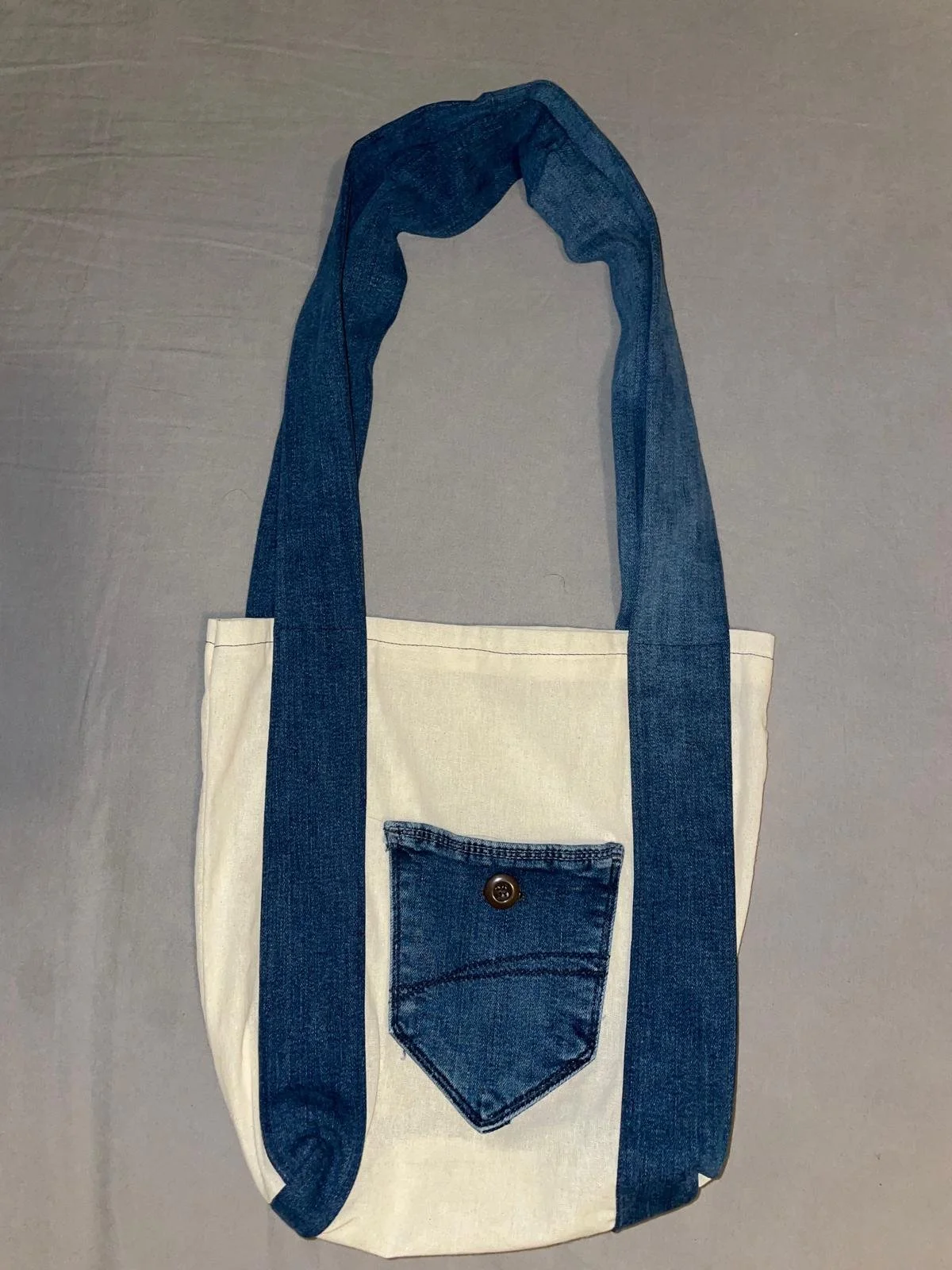
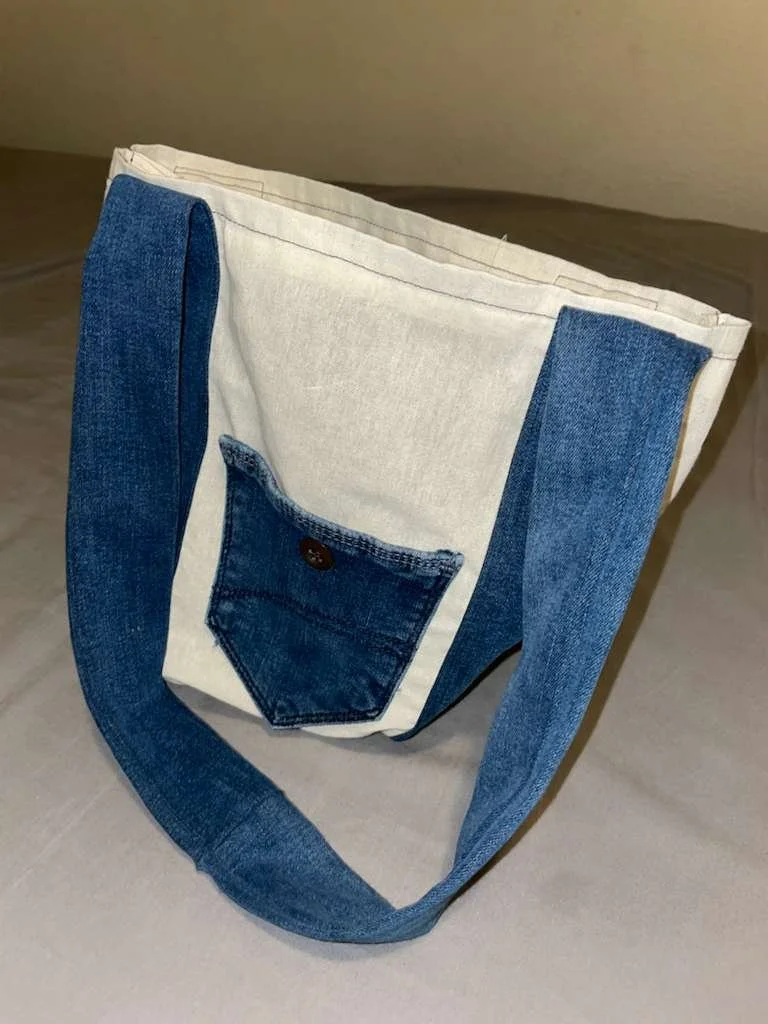
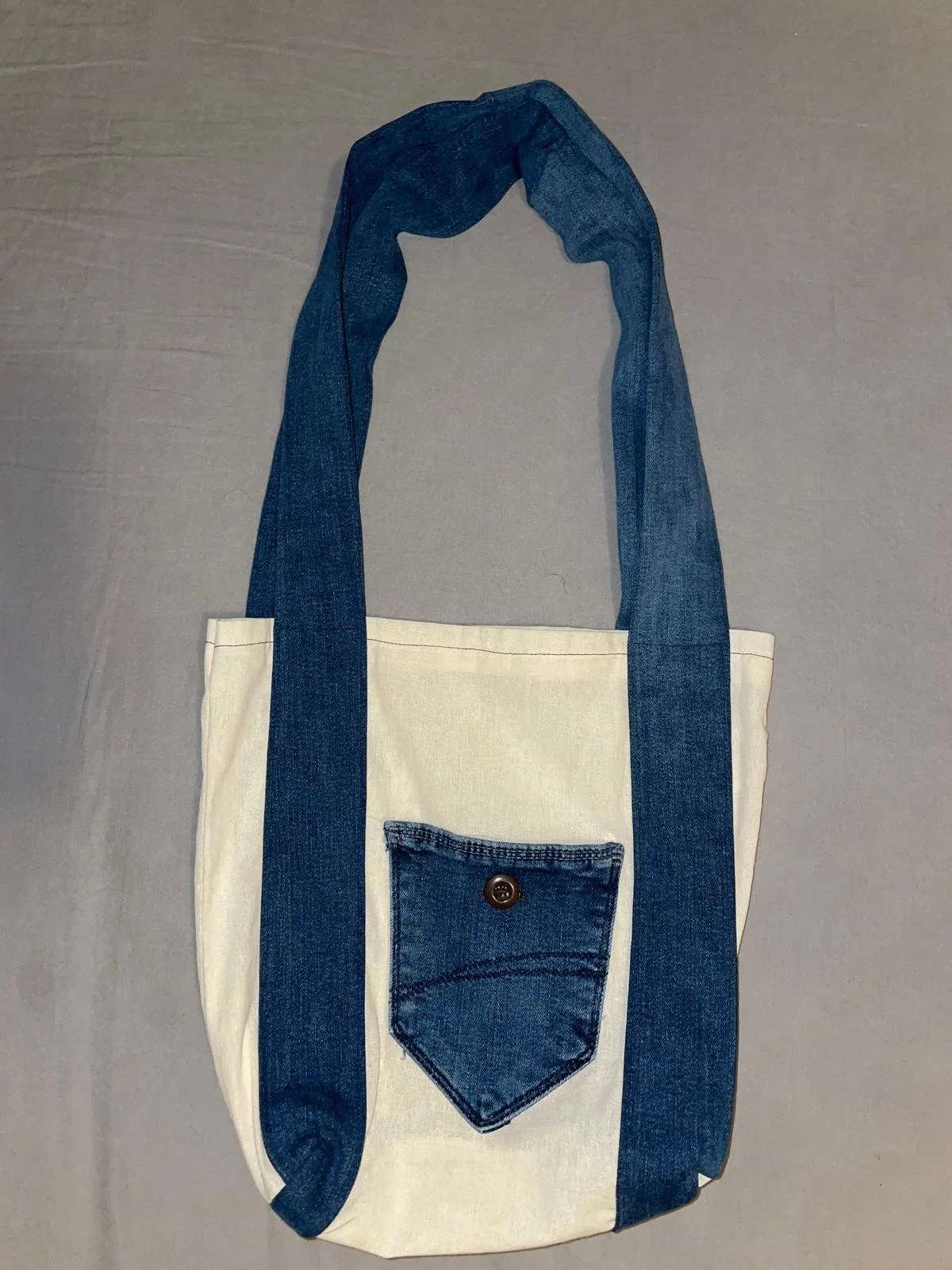
To meet these requirements, I constructed a flat bottom tote bag with a front pocket.
Design Development
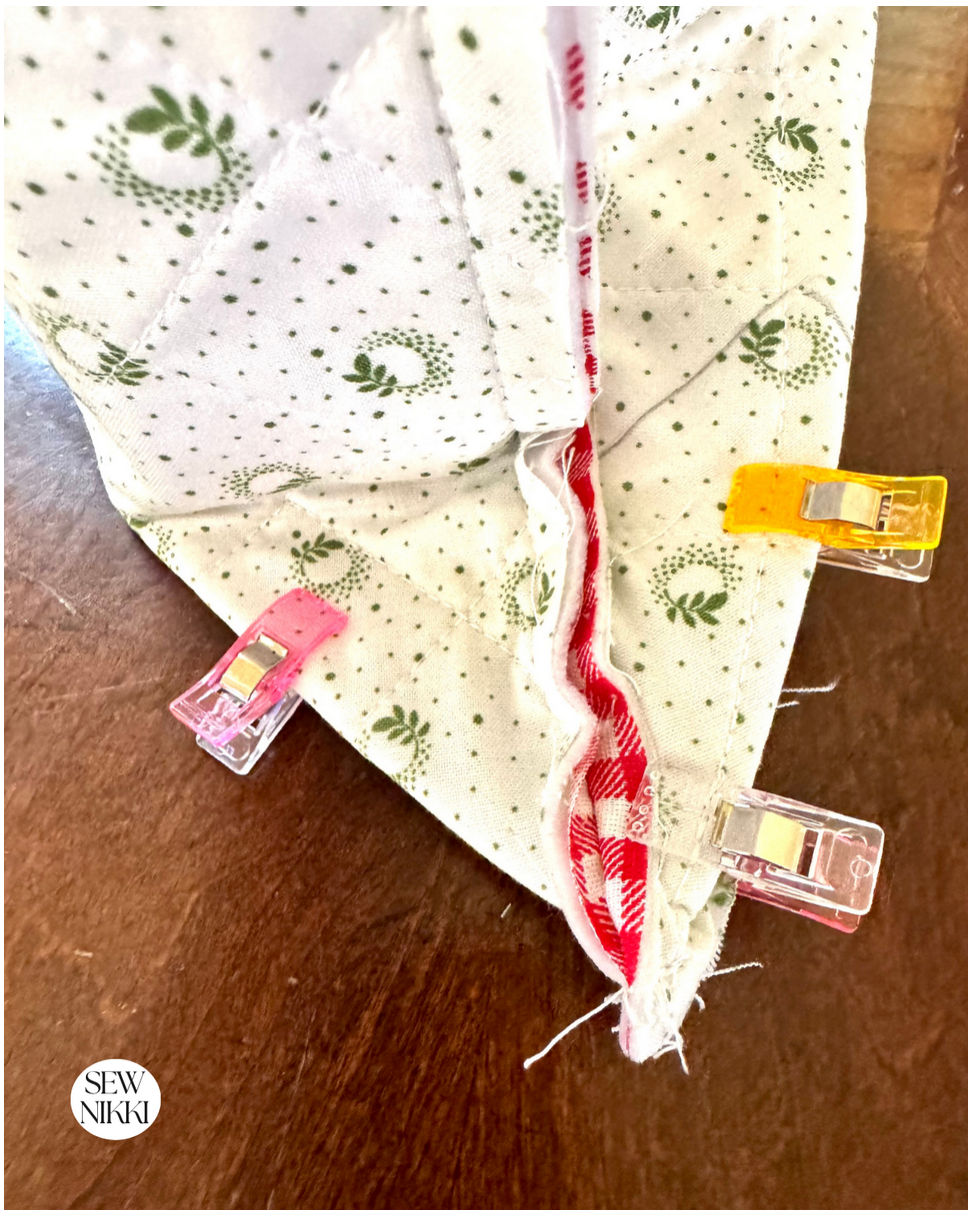
I began the project by outlining the use case for prototype. I decided to create a book bag. The design specifications of which were to be able to hold 2 average sized novels and for it to be able to stand on it’s own when holding the books. With these design specifications in mind, I began researching exisiting designs online to see if they could be modified to fit my use case. Eventually, I settled on a pattern from Sew Nikki, which I believed I could modify to meet my design specifications.
Design Inspirations
-
![Tote Bag with Trader Joe's Logo]()
Trader Joe's Tote
-
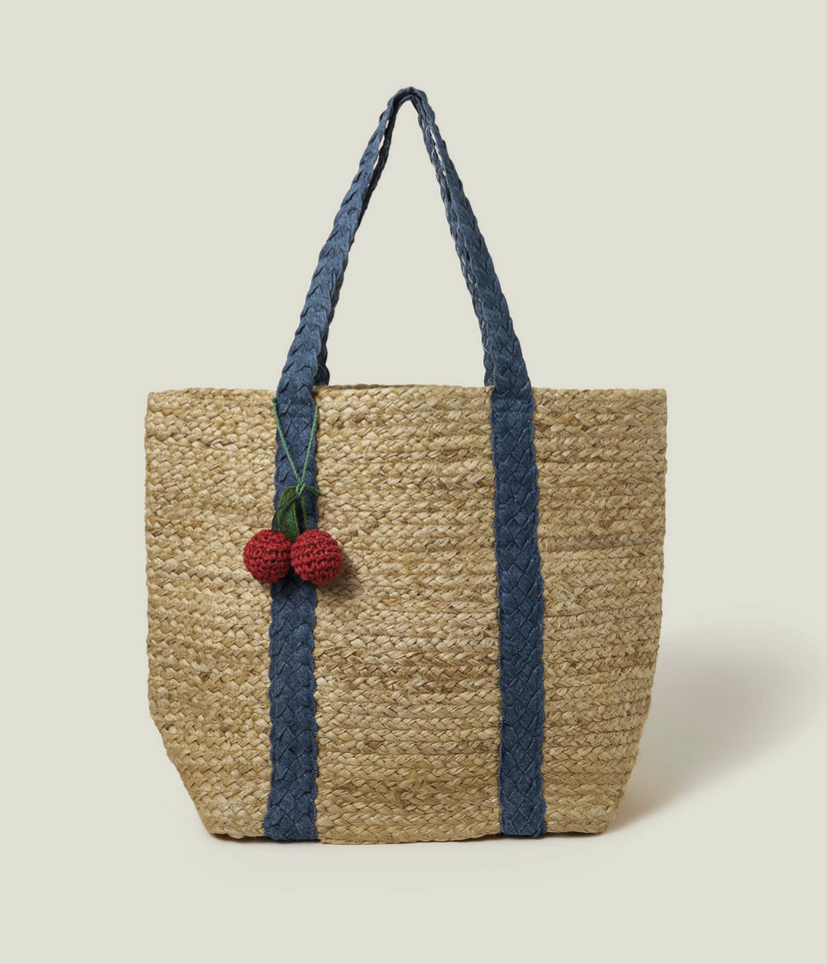
![Jute tote bag with denim straps]()
Jute & Denim Tote
-
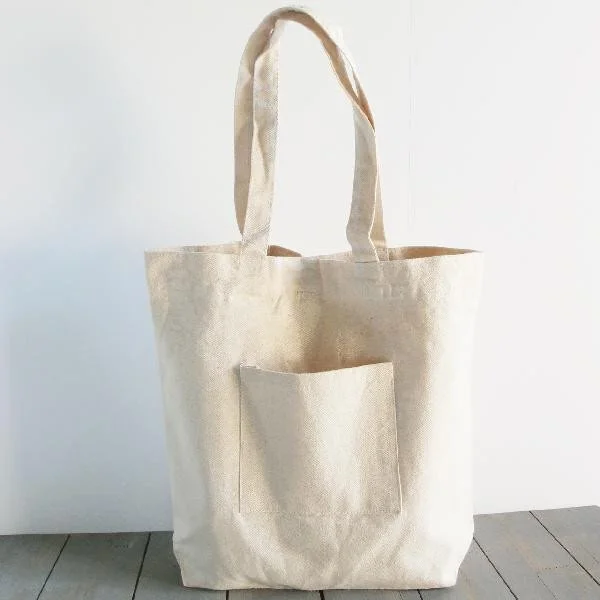
![Canvas tote bag with an external pocket]()
Canvas Tote With Pocket

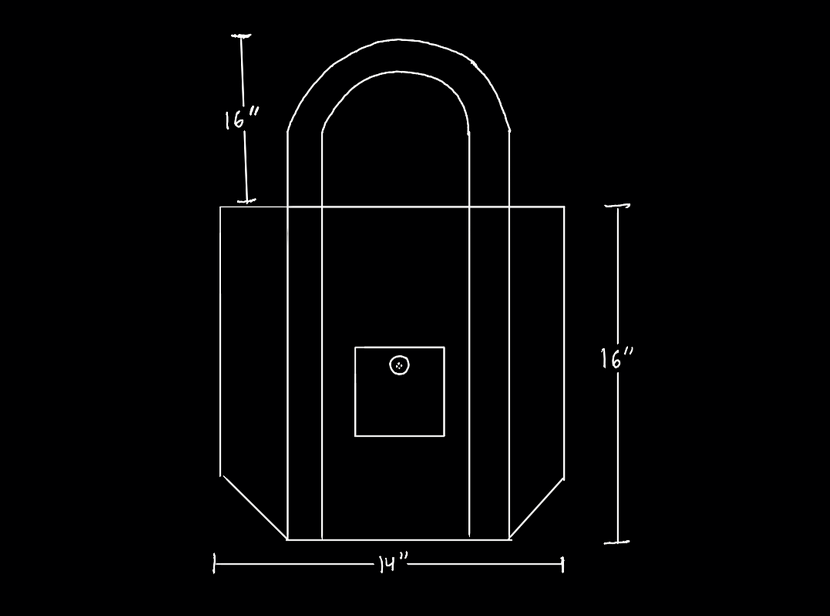
Design Sketch
-
An external pocket will be fashioned from the pocket of an old pair of jeans.
-
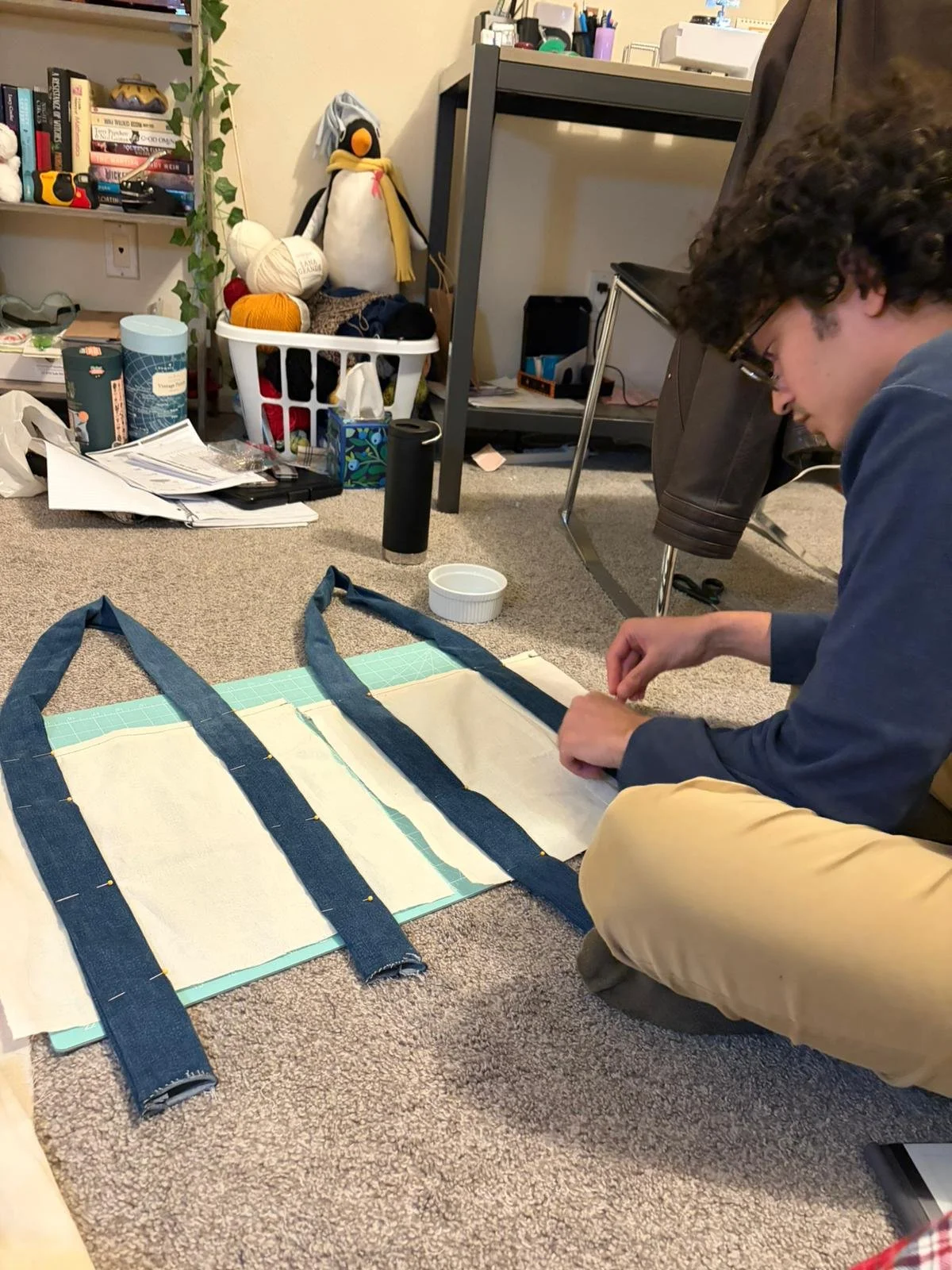
Straps will go along the entire length of the bag. They will be made of denim to contrast against the muslin and match the pocket. The straps will extend 16 inches above the body.
-
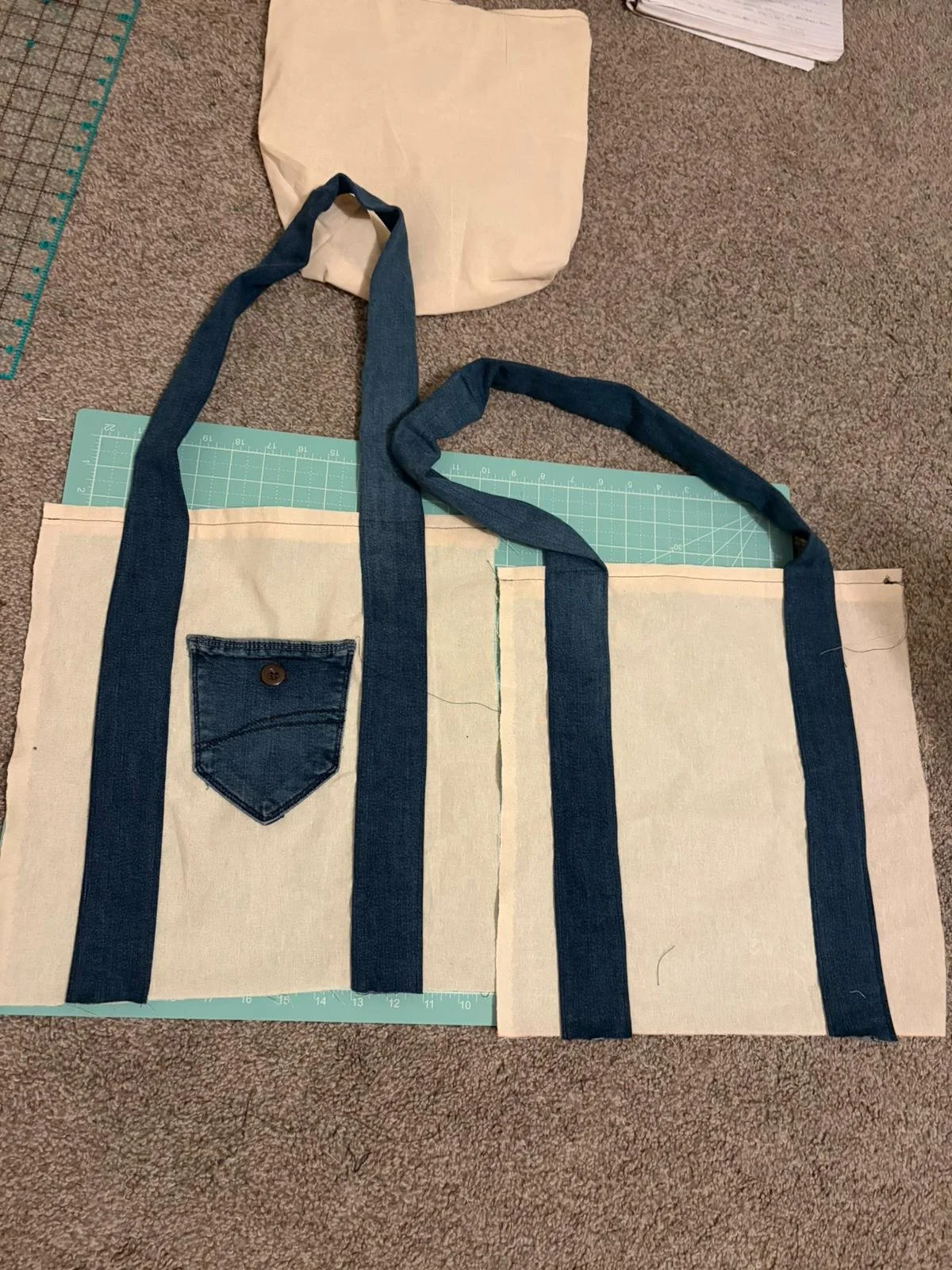
The body will be two rectangular pieces which are sewn together. The corners will then be folded and stitched so the bag has a flat bottom and can stand upright when holding items. The body will be 14 inches wide and 16 inches tall.
Muslin Prototype
The goal of the prototype was to determine if the design for the body of the bag was viable and gain experience in sewing the straps and body.
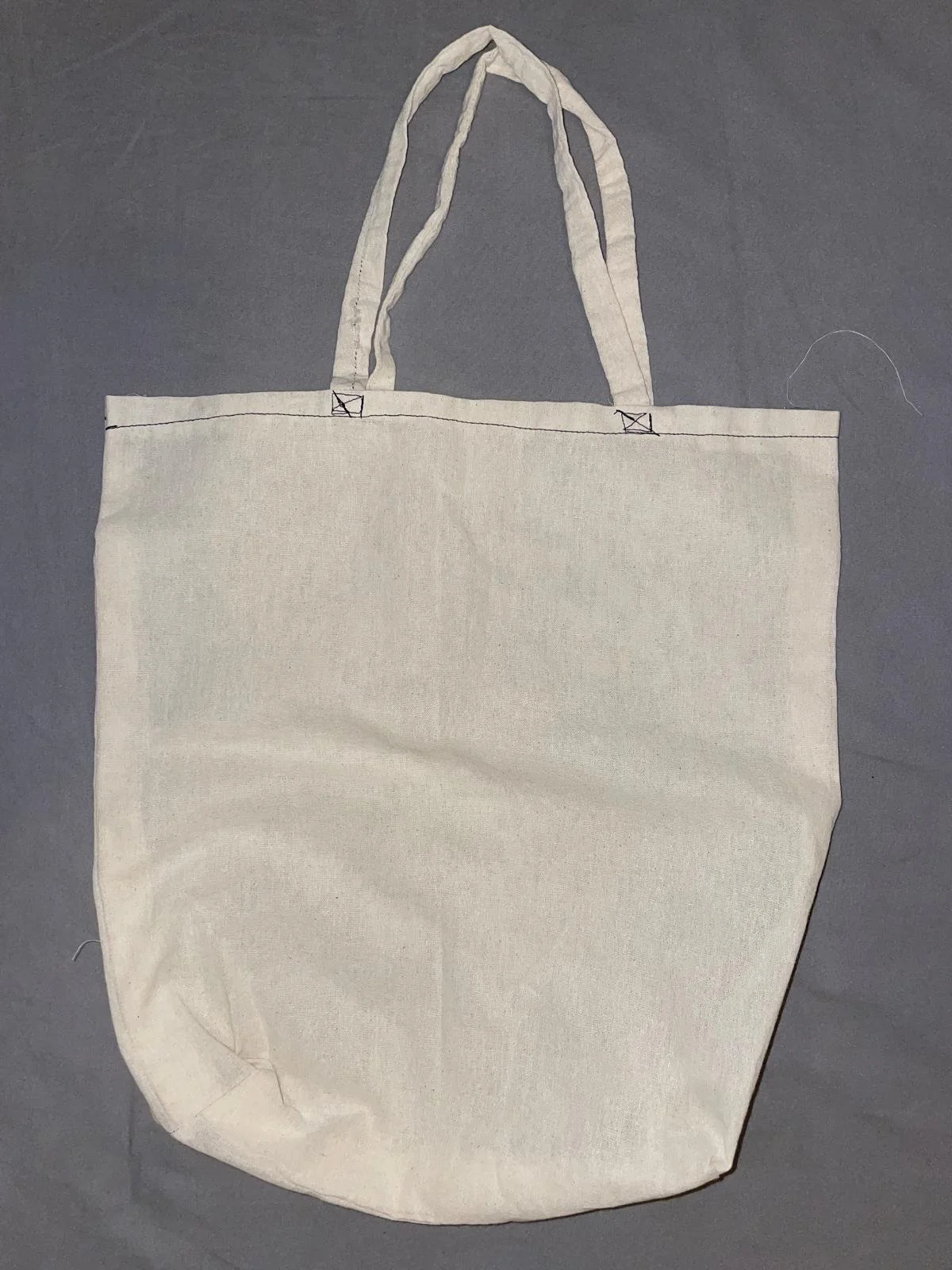
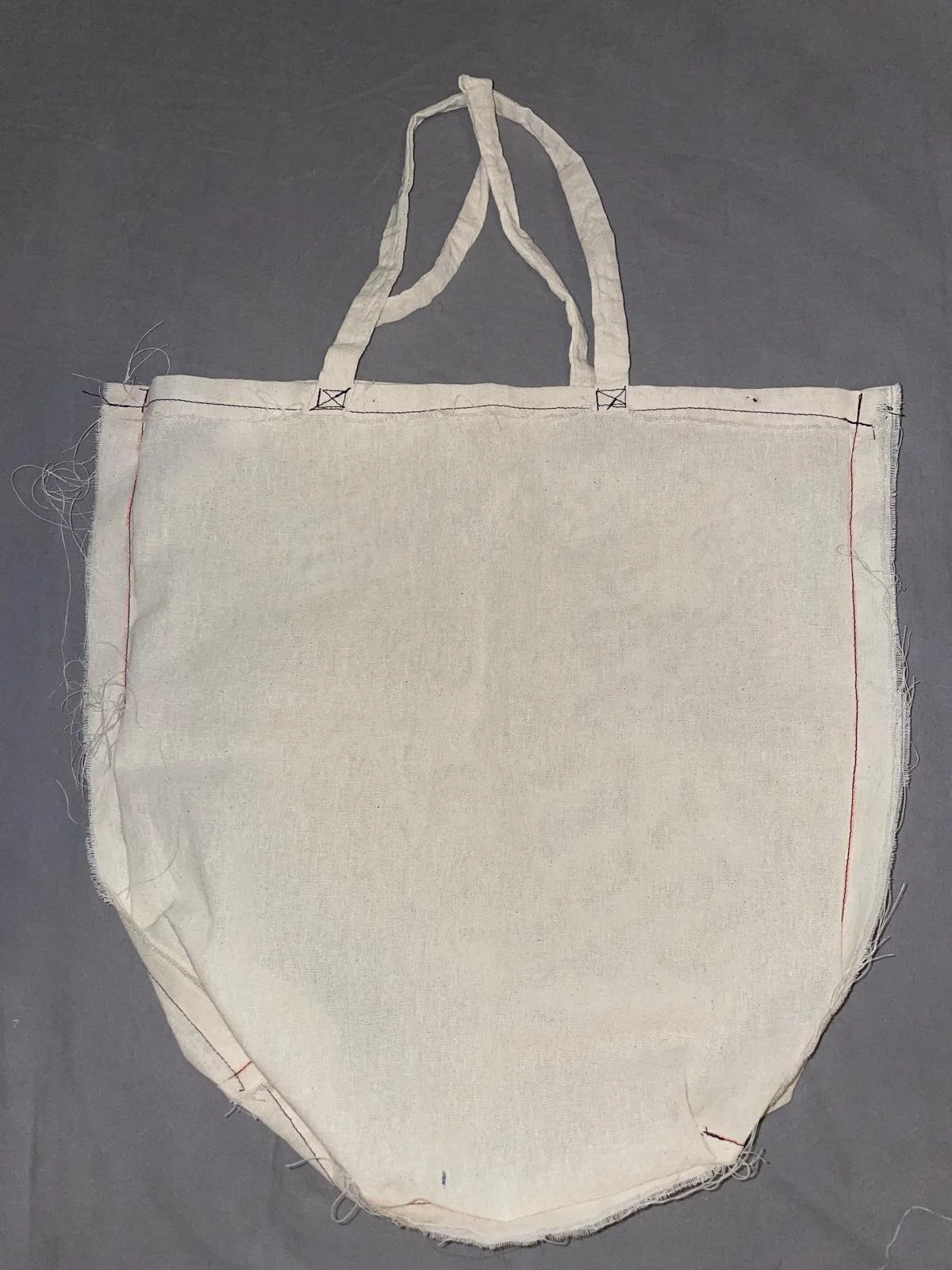
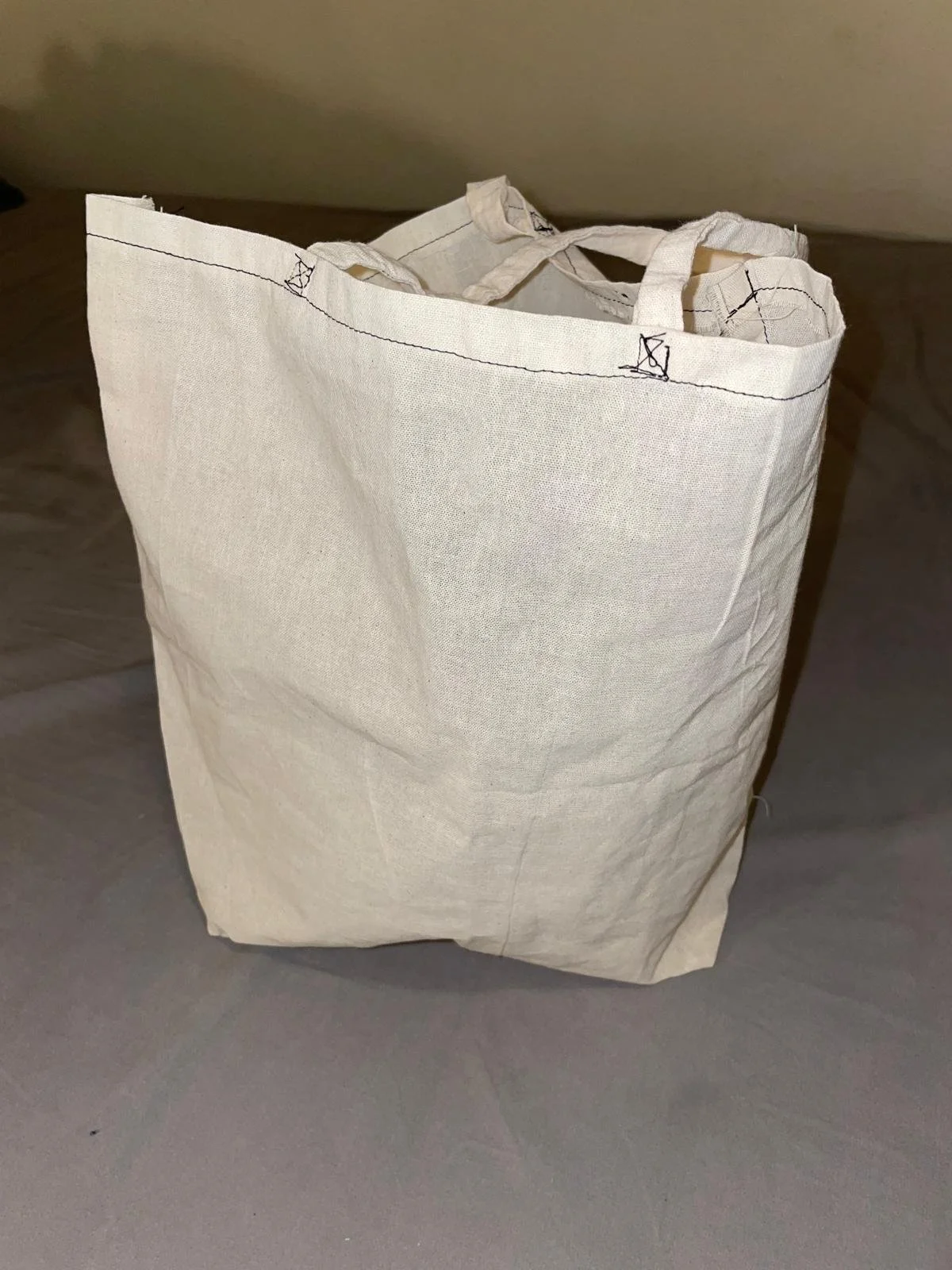
Refined Prototype
For the refined prototype I incorporated the denim. Additionally, I increased the thickness of the straps when compared to the muslin prototype as I felt they were too thin. I added the pocket to the outside as well as having the straps go along the entire length of the bag.
Analysis and Changes
User testing / feedback gave me insight into the pain points within my design:
The straps fall of the shoulder easily because they aren’t flat
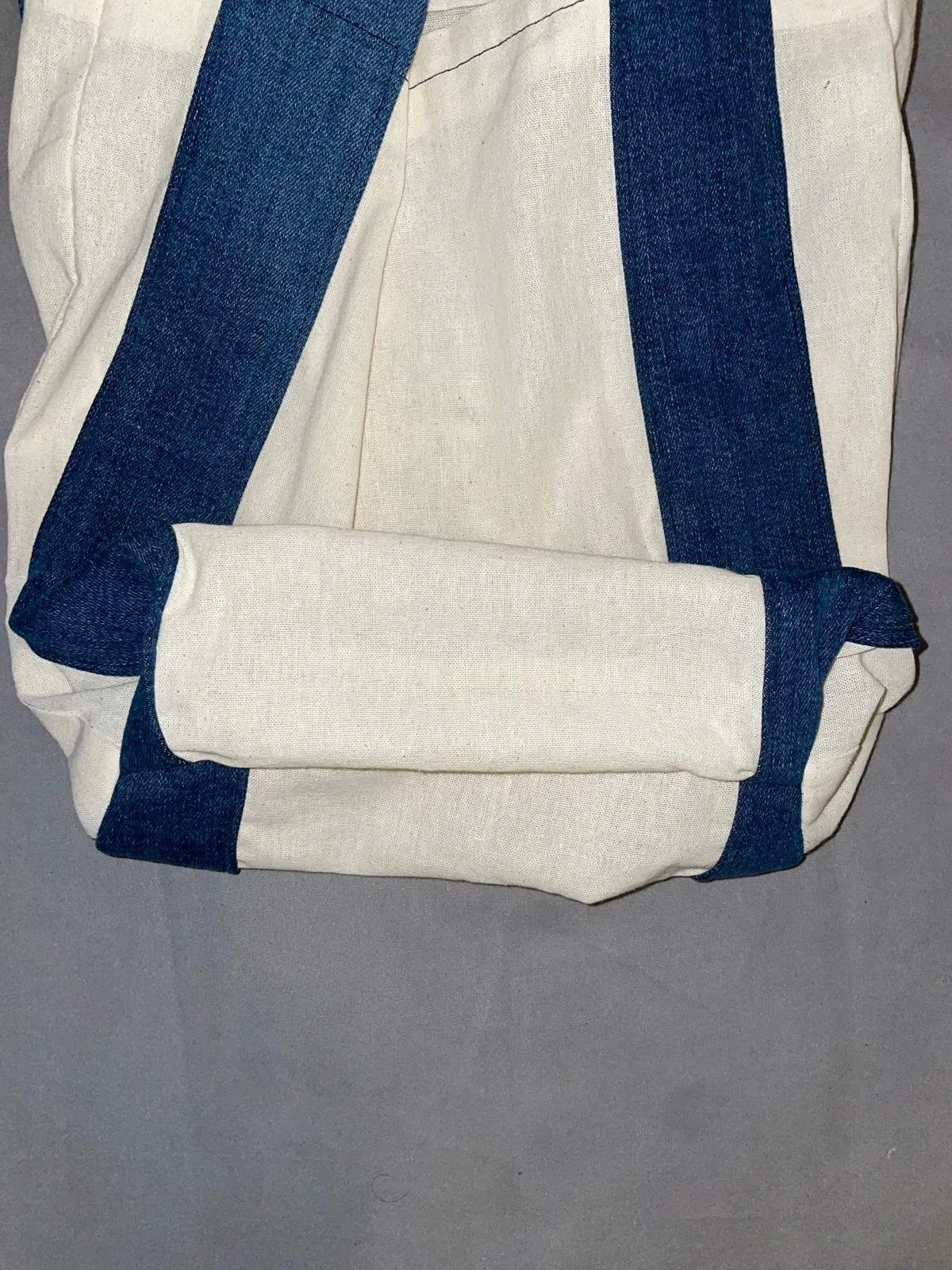
The straps do not line up on the bottom edge
The flat bottom is not even on both sides (shown on right)
The edges inside the bag are fraying
The fabric of the main body is quite thin
Design Changes
For a final iteration of this design I would make several changes. First, I would add a stitch along the entire edge of the straps so they sit flat. This will hopefully ensure that they do not roll off the shoulder when you wear the bag. Next, I would increase the length of the rectangular fabric sections used for the body by an inch. This would let me make the flat bottom larger so that the bag can be used to carry more as currently it just about fits 2 books when free standing. I would add a lining to the bag as well to increase the thickness of the fabric and remove the issue of the edges on the inside of the bag fraying. Finally, I would take more measurements during construction so that I could line up the straps and the bottom more evenly which will hopefully improve the bags ability to self stand.